
Is retail media only a lower-funnel channel?
As of November 2026, the answer from the people buying and measuring it is no: retail media is being pulled up the funnel, into in-store formats and creative, while its measurement moves into the advertiser's own hands. If you are deciding whether your sem agency or in-house team should manage retail media networks alongside search, the debate below is the one worth following.
What did Dentsu say about retail media in November 2026?
At Digiday's Media Buying Summit in Newport Beach in early November 2026, Aisha Khan, Dentsu's president of commerce for North America, put a simple question to the room: why is so much retail media money still sitting at the very end of the purchase journey when most purchases do not happen online at all?
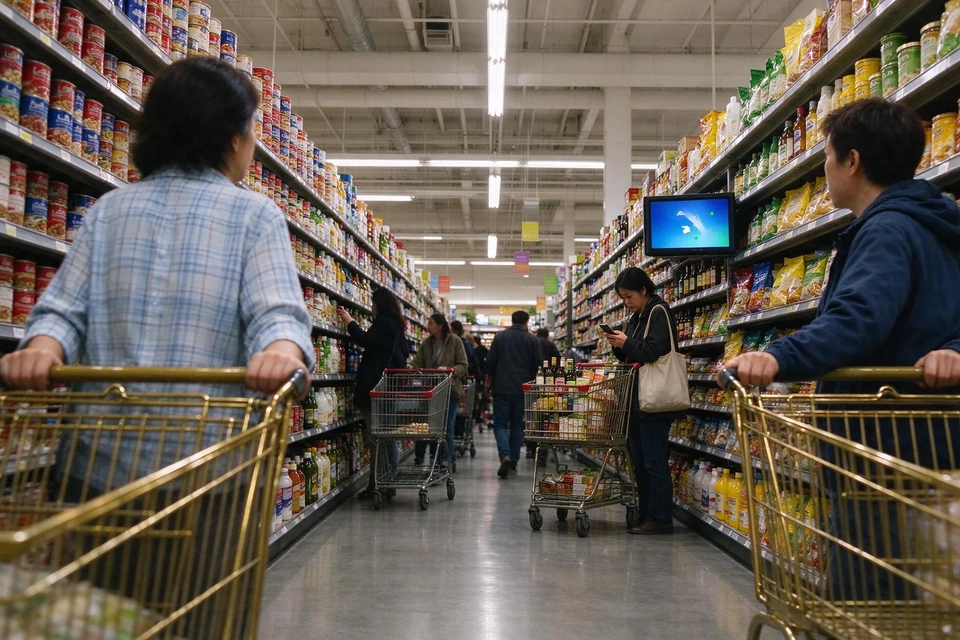
She cited a pair of figures that frame the whole argument: more than 80% of sales still happen in store, while less than 5% of retail media spend goes to in-store media. Digiday's Michael Bürgi reported her remarks on 3 November 2026. The same article quotes two other speakers, Instrument CEO Laurel Burton and Crocs CMO Carly Gomez, who took the audience in a different direction when they argued that websites remain the centre of a commerce strategy even as answer engines absorb part of the discovery journey.
This is a news explainer, not a channel review. What matters for a marketer is not who said what most memorably, but which of the claims would actually change a media plan - and which apply to a Singapore advertiser with a shop, a website and a Google Ads account.
Key takeaways
- More than 80% of sales still happen in store, yet less than 5% of retail media spend goes to in-store media, according to Khan's figures as reported by Digiday.
- The cost objection to retail media is about efficiency at the bottom of the funnel, not about ineffectiveness.
- Closed-loop measurement is the feature that sold retail media, and the same measurement is now something advertisers can build themselves rather than buy from the retailer.
- Creative and upper-funnel placements are the part of retail media that has been left out of most media plans.
- If you run search and shopping through a sem agency singapore team, retail media needs to sit in the same plan and the same reporting view, not in a separate line item.
Why is retail media described as an expensive lower-funnel channel?
The complaint Khan made is specific: retail media is effective because it sits close to the point of purchase, but it is also expensive, so the efficiency does not always hold up. That is a different criticism from "it does not work". She framed the next phase as a rebalancing between effectiveness and efficiency, with some areas flattening and growth coming from others, in-store media among them.
For a small or mid-sized advertiser, this matters when the channels compete for one budget. A retailer network placement at the bottom of the funnel is easy to justify because attribution sits with the retailer and the sale is close - which is also why an honest sem agency should ask what it cost per sale before it stays in the plan. The same placement is hard to defend when the margin per order is thin and the budget has to stretch across search, social and the shop.
Rachel Teo's habit of stating who the advice does not suit applies here: if your business has no physical retail presence and sells only through a website and a call centre, the in-store half of this argument is background reading. The measurement half still applies.
How do you run retail media beyond the lower funnel?
The information gain this article tries to add is a working framework. It turns the three points the speakers made into a decision you can check against your own plan.
| Decision | What to test | What it tells you |
|---|---|---|
| Upper-funnel placement | A retail network placement that reaches shoppers before the last click, against the same spend at the bottom | Whether the extra reach earns back what it costs in attributed conversions |
| In-store media | Any in-store or near-store format the network offers, tested for a fixed period | Whether the physical point of purchase is being under-used relative to where sales happen |
| Measurement ownership | Your own tracking of the same orders the retailer reports, reconciled | Whether the data CPM you pay for closed-loop measurement is still worth it |
Each row has a condition. The upper-funnel test needs a window long enough to see conversions that the last click would not have claimed. The in-store test needs a retailer or network that actually offers the format. The measurement row needs your own source of order data, whether that is a CRM, an e-commerce back end or a call-tracking log.
A useful rule of thumb is to write the test down before you buy: which placement, which audience, which period, and which metric decides the result. If the plan cannot name the metric, the placement is being bought on faith, which is exactly the situation the speakers described.
What does closed-loop measurement really promise?
Khan described the boom in retail media as resting on one promise: that you could understand, dollar by dollar, what each pound of spend drove on the other side. The promise is strong, and it is also the reason advertisers pay a premium.
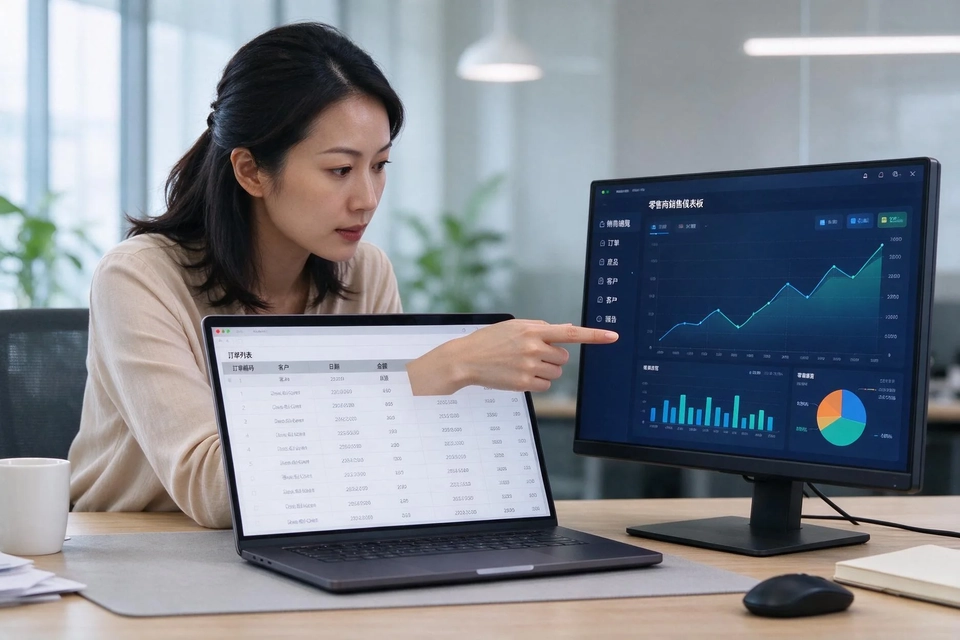
Her further point is the more consequential one for planning. As AI-assisted media mix modeling and incrementality testing get more sophisticated, advertisers can build their own view across several retailers instead of letting each retailer grade its own homework. If that happens, the data CPM that retailers charge for closed-loop measurement can compress.
For an advertiser, this turns measurement from a purchase into a capability. The question stops being "which network gives us the best closed-loop report" and becomes "can we reconcile what several networks claim against one order file of our own". That is a different procurement brief, and it needs someone who can read more than one platform's dashboard; it is the kind of question a sem agency is asked when a client wants one view across networks. The revenue tracking service exists for the last part of that sentence: matching what an ad platform reports to what the business actually booked.
Where does creative fit in a performance channel?
Retail media has been treated as a performance channel, and Khan's argument is that this has cost it the creative component that shopper marketing used to carry. She named CVS and Kroger as networks pushing creative boundaries, without giving detail, so treat the comparison as a direction rather than a benchmark.
The practical consequence is small but real. If the only creative you test in retail media is a product tile with a price, you are not testing the channel; you are testing the tile. A brand-level message or a shopper campaign concept belongs in the same test matrix as the offer-led creative, especially if you are using in-store formats where the setting is closer to a supermarket aisle than a search results page - a discipline a sem agency already applies to ad creative testing in search.
Laurel Burton and Carly Gomez made the parallel case for the website. Burton described websites as the central hub that has to deliver one consistent experience to both the consumer and the answer engine; Gomez added that discovery may start in a language model, but the next stop is usually social, the e-commerce site or the app, and all of them should feel like one brand. Retail media sits inside that same consistency problem, not outside it.
What does this mean for a Singapore media plan?
Retail media in Singapore is developing around a smaller set of networks than in the United States, and many local advertisers meet it first through a supermarket loyalty programme, a marketplace's ad console, or an offsite placement bought through a search or social plan. The offsite side is worth understanding before the network conversation: offsite retail media and Google Ads covers how audiences bought from retail data are run through Google Ads rather than inside a retailer's own console.
What the summit discussion changes in a plan, in practice:
- Put retail media in the same budget conversation as search and shopping, so the efficiency question is asked across channels rather than inside one network's dashboard.
- Ask each network what its in-store offer is before signing, since that is where the speakers see the unused potential.
- Decide who owns the reconciliation of orders before the first campaign, not after the first disputed report.
If you are choosing an agency for this work, the questions in Ringoli's guide to picking a search marketing company are a reasonable starting point even though the guide is written for Hong Kong: does the team know your industry, how does it report performance, and does it keep optimising after the set-up. The market differs; the questions transfer.

Topkee's point of view
The plan's product knowledge notes hold nothing about retail media specifically, so this section states the market position rather than a product claim.
For an advertiser, the summit discussion describes a channel that is being asked to do more than it was bought to do: reach shoppers before the last click, support creative, and produce measurement the advertiser can defend. The work that supports that shift is mostly unglamorous - a plan that names the metric for each placement, an order file that can be reconciled with what a network reports, and a creative test matrix that does not stop at the product tile. An agency earns its place in that work by doing it across channels, not by adding a retail network line to a search report.
FAQ
Is retail media worth it for a small Singapore business?
It depends on margin and on whether you sell through a partner whose data would otherwise be closed to you. If the margin per order is thin and the retailer's data CPM is high, the efficiency problem Khan described applies directly. Start with a fixed-period test and a named metric.
Why is such a small share of retail media spend in-store?
Khan's figures, as reported by Digiday, put in-store media at less than 5% of retail media spend while more than 80% of sales still happen in store. She framed the gap as an opportunity for retailers to digitise the physical shopping experience.
Can an advertiser measure retail media without the retailer's report?
Partly. Advertisers can combine their own order data with media mix modeling and incrementality tests, which is the direction Khan described. The retailer's own report stays useful as one input, not as the final word.
Does creative still matter in a performance channel?
Yes, and that was one of the main arguments at the summit. A channel measured only on last click rewards the safest creative; testing a brand message alongside an offer-led tile is how you find out whether the channel can do more.
Should search and retail media be managed by the same agency?
Not necessarily, but they should share one reporting view. If search and retail media are reconciled by different teams against different definitions of a conversion, the comparison that justifies the budget cannot be made.
Sources
- Michael Bürgi, "Agency execs call for retail media to be holistically considered beyond the lower funnel", Digiday, 2026-11-03. https://digiday.com/media-buying/agency-execs-call-for-retail-media-to-be-holistically-considered-beyond-lower-funnel/
- "How to choose a Good SEM company in Hong Kong", Ringoli, n.d. https://www.ringoli.net/how-to-choose-a-good-sem-company-in-hong-kong/